Sign in. It’s quick, free and it’s up to you.
An account is an optional way to support the work we do. Find out more.
Sign in. It’s quick, free and it’s up to you.
An account is an optional way to support the work we do. Find out more.
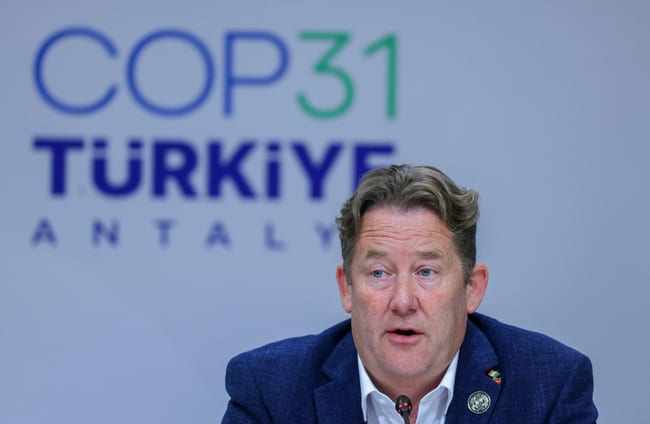
THE UN’S COP31 climate talks enter their endgame today, with countries sharply divided over a draft deal lacking any mention of planet-heating fossil fuels, threatening to push the negotiations into overtime.
Negotiators from nearly 200 countries were scrambling to bridge their differences after two weeks of talks in the Turkish Mediterranean city of Antalya, but the summit appears poised to spill into the weekend.
The talks come with a series of stark reminders of the urgency of climate action, from heatwaves in Europe and devastating floods in Nepal to a record-breaking El Niño wreaking more havoc around the world.
The war in Iran and oil price shock have added another layer of complexity to the talks, sharpening divisions over energy security and the future of fossil fuels.
An initial draft deal earlier this week included calls to accelerate action to phase out fossil fuels.
But a new version released by COP31 co-host Australia on Thursday omitted any mention of oil, gas and coal – the main drivers of climate change.
The absence is a “black mark”, France’s ecological transition minister Monique Barbut said.
“We will be consulting and negotiating until it is very clear to us that we have a consensus,” Australian climate minister Chris Bowen, who is steering the COP31 negotiations, told reporters.
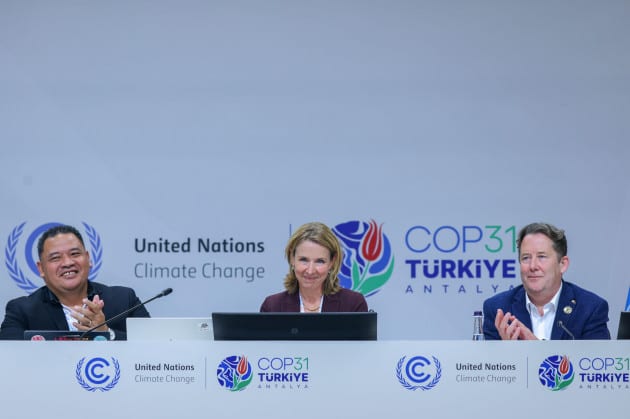 Maina Talia, Tuvalu climate change minister, Stientje van Veldhoven, minister of climate policy and green growth of the Netherlands and Darragh O'Brien at a session on transitioning away from fossil fuels Alamy
Nations agreed at COP28 in Dubai in 2023 to transition away from fossil fuels, without setting targets or timelines, and oil-producing countries have fiercely resisted any attempt to bring the issue back to the table.
Last year’s summit in Brazil ended without any mention of fossil fuels, prompting countries to pursue their own efforts outside the United Nations process to exit coal, oil and gas.
“Countries beholden to fossil fuel interests are blocking progress on a fast, fair transition away from fossil fuels,” said Rachel Cleetus, climate program director at the Union of Concerned Scientists.
COP31 host Turkey has instead pushed for countries to join a voluntary pledge to increase the global share of final energy demand met by electricity to 35 percent by 2035.
The draft deal includes a nod to the Turkish initiative, saying that taking steps to electrify the global economy could have “significant benefits” in shoring up energy security and cutting planet-heating greenhouse gas emissions.
Some countries are concerned the text as written does not explicitly require that extra electricity be powered by clean energy and not coal or gas.
“We are going to fight for clean electrification,” Barbut said.
Some countries also raised concerns about language welcoming efforts to ramp up carbon capture, utilisation and storage technology, which critics see as an expensive distraction from cutting pollution.
Vanuatu’s Climate Minister Ralph Regenvanu told AFP it “had been singled out for special attention that it doesn’t deserve” in the latest text.
A fight over climate science has also emerged at COP31.
The timing of the next set of reports by the UN’s Intergovernmental Panel on Climate Change (IPCC) has been a source of considerable friction.
The latest text underscores the “importance” of the IPCC.
Dozens of countries want the IPCC’s next assessments available before a global review of carbon-cutting efforts in 2028. A smaller number of nations, including Saudi Arabia and India, want them postponed until 2029.
The draft expresses “deep concern” about the imminent breach of the 1.5C temperature goal set under the 2015 Paris accord.
An age-old fight over money also has yet to be resolved.
Rich nations have resisted calls to increase support for countries struggling to adapt to climate change, citing budget constraints and insisting that big emerging economies such as China also contribute.
The draft proposes further discussions toward “tripling” finance for climate adaptation measures by 2035, but drops a $120 billion (€109.17 billion) goal being sought by developing nations.


have your say