Sign in. It’s quick, free and it’s up to you.
An account is an optional way to support the work we do. Find out more.
Sign in. It’s quick, free and it’s up to you.
An account is an optional way to support the work we do. Find out more.
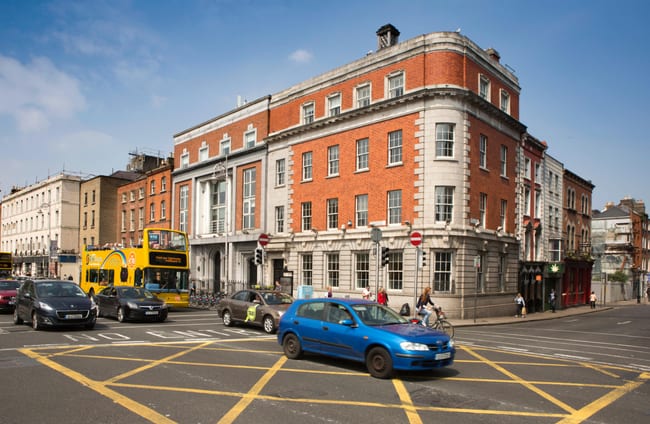
DUBLIN CITY COUNCIL is proposing to lower the speed limit on some roads in the city centre to 20km/h.
The majority of the streets dropping to 20km/h are pedestrianised for most of the day but are used for deliveries, while others are very pedestrian heavy but have multi-storey car park access.
Areas included in the proposal include Temple Bar, Talbot Street, Henry Street, Jervis Street, Exchequer Street and South William Street.
The council is also planning to make the speed limit 30km/h on a number of roads leading to the city centre.
If enacted, it will mean that 97% of Dublin’s roads will have seen their speed limits lowered from 50km/h as part of efforts to address road safety.
A presentation to the council’s transport committee said that 80 people were killed and more than 2,000 people were seriously injured in road crashes in the Dublin city area in the nine-year period from 2017 to 2025.
It outlined that the plans will go to public consultation soon, with the measures to be implemented next year if they pass a vote of councillors.
According to the council presentation, seen by The Journal, the annual number of serious injuries in the Dublin City Council’s administrative area has increased by 58% – jumping from 203 serious injuries to 321 in an eight-year period leading up to 2025.
Last year’s serious injury tally was also the highest annual figure in the period reviewed.
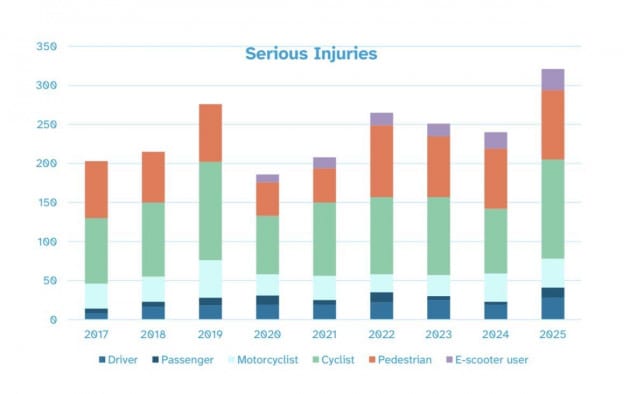 A graph in the report presented to Dublin City Council's transport committee outlining statistics concerning serious injuries from road incidents. Dublin City Council
The council report added that so far this year, six people have died on roads in the Dublin City Council area. The report classed them as vulnerable road users, noting that three were pedestrians, two were cyclists and one was travelling on an e-scooter.
The proposal to reduce the speed limits is part of the government’s wider move to halve road deaths and serious injuries by 2030.
Currently, the number of roads in Dublin with speed limits of 50km/h or 60km/h is at almost 10%, but this will drop to just over 3% under the plans.
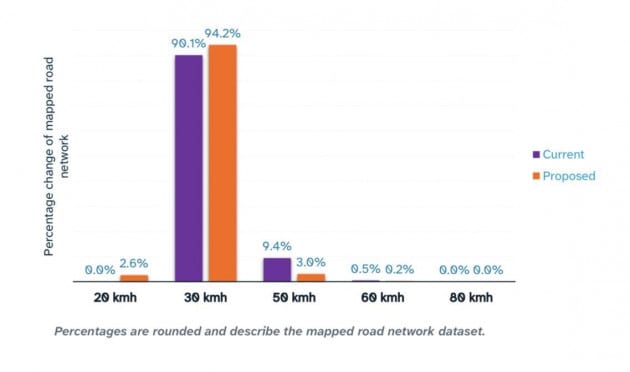 The report gave a breakdown of what proportion of roads will be set at lower limits. Dublin City Council
Green Party councillor Feljin Jose, who sits on the council’s transport committee, said that the proposal is designed to apply to roads where traffic speeds are already generally low, due to the high volume of pedestrians.
“These are small roads around the dense urban core where there’s a lot of shopping,” Jose said.
“A lot of them are already pedestrianised for most of the day, or they’re where pedestrians outnumber vehicles already, or on the likes of Exchequer Street, which is not pedestrianised but has a lot of pedestrian traffic because the footpaths are so narrow.”
The Cabra-Glasnevin councillor added that while fatal road incidents dominate headlines about Ireland’s roads, the rise in serious injuries from road crashes has sometimes been a “hidden statistic” in discussions on road safety.
“These are incidents where there are life-changing injuries and that number keeps going up,” Jose said.
Jose said the new plan was worked on after a government instruction for councils to begin introducing the lower speed limits in built-up areas.
An example of where this will be extended to is in Phibsborough, where it will drop to 30km/h on approach around areas that are busy with pedestrians, before returning to 50km/h.
Elsewhere, there is a proposal to extend the lower speed limit to 30km/h at school drop-off and collection times around the city.








have your say