Sign in. It’s quick, free and it’s up to you.
An account is an optional way to support the work we do. Find out more.
Sign in. It’s quick, free and it’s up to you.
An account is an optional way to support the work we do. Find out more.
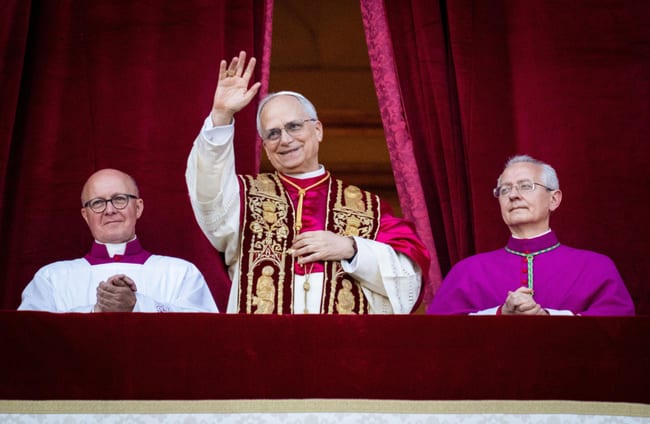
THE VATICAN HAS confirmed that a tumour removed from Pope Leo XIV was a lung adenocarcinoma, but said the cancer was localised and that no further treatment is required.
The Pope underwent surgery at Rome’s Gemelli Hospital on 13 October, during which the lower lobe of his right lung was removed.
Doctors said the operation was successful and there were no complications.
In an update on Wednesday night, the Holy See said final tests on the removed tissue had confirmed the type and extent of the cancer.
“The results confirmed that the tumour was a lung adenocarcinoma and that the disease was localised,” the statement said.
“A subsequent oncological assessment has confirmed that no further treatment is necessary.”
Adenocarcinoma is the most common form of non-small-cell lung cancer, the category that accounts for more than four in every five lung cancer cases.
It begins in the mucus making gland cells in the lining of your airways.
Lung cancer is broadly divided into non-small-cell and small-cell cancers (that distinction is important, because the two forms tend to grow and spread differently and are treated differently).
Smoking is the main cause of lung cancer, but adenocarcinoma can also occur in people who have never smoked. Other risk factors for lung cancer include prolonged exposure to radon, air pollution and substances such as asbestos and silica.
There is no suggestion from the Vatican that any particular risk factor was involved in the Pope’s case.
Possible symptoms of lung cancer include a persistent or worsening cough, coughing up blood, breathlessness, chest pain, repeated chest infections, unexplained weight loss and fatigue.
However, some lung cancers cause no symptoms and are found during tests carried out for another reason.
A localised cancer is one that remains in the tissue or organ where it began, with no evidence that it has spread to nearby lymph nodes or other parts of the body.
That’s generally a more favourable finding than regional or metastatic cancer, and some localised cancers can be completely removed through surgery.
However, ‘localised’ is a broad description rather than a precise cancer stage.
The Vatican has not disclosed the size of the Pope’s tumour, its exact stage or the detailed findings from testing.
Comments are unavailable right now as we upgrade some of our systems.



have your say