Sign in. It’s quick, free and it’s up to you.
An account is an optional way to support the work we do. Find out more.
Sign in. It’s quick, free and it’s up to you.
An account is an optional way to support the work we do. Find out more.

IT’S A DAY of rest, and you may be in the mood for a quiet corner and a comfy chair.
We’ve hand-picked some of the week’s best reads for you to savour.
 Paige Vanzant and Mikael-Michelle Brown meet on the mat for a bout at Fontaine Bleu for PowerSlap 12 in Las Vegas, in 2025. Alamy
Viral social media moments have helped one of the newest comat sports – slap fighting – reach new heights.
(The Guardian, approx. 25 mins reading time)
“The rules are straightforward. Competitors stand either side of a central podium. In each round, they are permitted to strike their opponent – open-handed, ungloved, cheek only – a single time. After one minute of recovery time, they must allow themselves to be struck back. Bouts range between three and five rounds. Victory can be earned on points – the three judges look for clean technique and the impact a strike makes – but about half are won via knockout.”
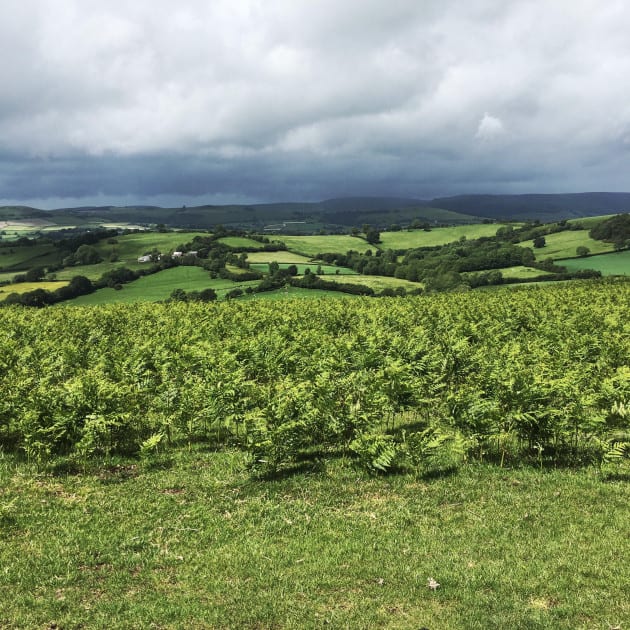 Gladestry, Powys, Wales. Alamy
This article from The Guardian looks at a small village in Wales as an example of how rural depopulation is impacting communities.
(The Guardian, approx. 20 mins reading time)
“Gladestry is home to 400 people and sits (just) on the Welsh side of the border with England. Indeed, if you’ve ever walked the Offa’s Dyke footpath that runs, more or less, along that border, you’ll have passed right through the small cluster of buildings that mark its centre. The school has been educating Almans since Joseph’s grandfather and great-uncle arrived in 1917, but Charlie could be the last. In June, just before the start of the summer holidays, Powys county council announced that it wanted to close the school.”
 Alamy
American men are searching for community – and finding it in religion. Many of these men come across Catholicism via social media.
(The New York Times, approx. eight mins reading time)
“For decades, Roman Catholicism — like Christianity more broadly — was declining: More people were leaving the faith, with fewer to take their places. But something may be changing. In recent years, the share of people in the United States who identify as Christian seems to have stabilised, and Catholic churches have experienced a noticeable wave of new converts. Some surveys have pointed to an uptick in religious participation among Gen Z men in particular.”
 Alamy
This journalist spoke to dozens of experts and read over a hundred papers to find out why back pain is so common, and also so hard to get rid of.
(The New York Times magazine, approx. 23 mins reading time)
“No wonder, then, that many people end up turning to the rapidly expanding grey market in questionable cures. ‘I remember spending hours going down the rabbit holes of whatever website, whatever blog I found, and checking out whatever weird things they were recommending,’ says Toby Lawhon, a back-pain sufferer from Atlanta. ‘At one point, I ordered some strange Chinese supplements off Amazon, which probably were sugar pills. The list was long. I just needed something — anything — to work.’ He went on, ‘Where the science isn’t clear-cut, where we’re still figuring things out, it’s the perfect terrain for nefarious actors to break in.’”
 Kate was killed on the 19 November 2021, in Nairobi, Kenya. Alamy
BBC charity worker Kate Mitchell was killed in Kenya five years ago. Her brother is still looking for answers.
(The Observer, approx. 16 mins reading time)
“Her body was found in a hotel room. Her suspected murderer’s body was found outside, eight floors below the room’s window. For the past year, Mitchell has endured the Kenyan inquest and shared material with me, including witness statements, exhibit lists, postmortem reports and a video of his sister’s funeral.”
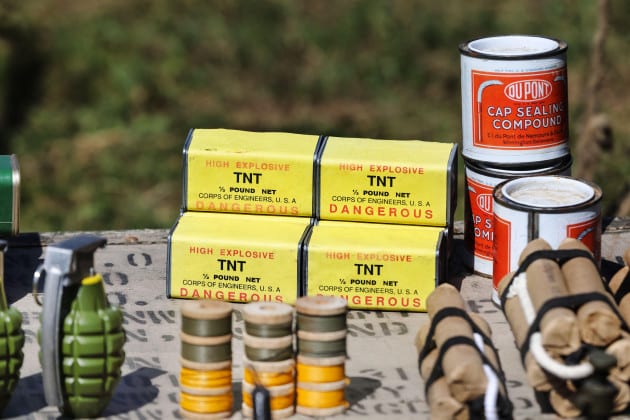 Police discovered over 400 devices. (File photo of TNT Explosives used in WW2) Alamy
The death of a 64-year-old man led to the discovery of one of the largest collections of explosives ever discovered in the UK.
(Dispatch, approx. 14 mins reading time)
“The story might have stopped there, with Nelson simply one of the more than 1,500 people who died in Britain on 23 June 2025, if one of the paramedics hadn’t looked towards the mantelpiece of his cramped, overfilled living room. Sitting there, like cheap ornaments, were two hand grenades. It was only after the paramedics retreated and the police were called in that the true scale of the situation was revealed.”
 Alamy
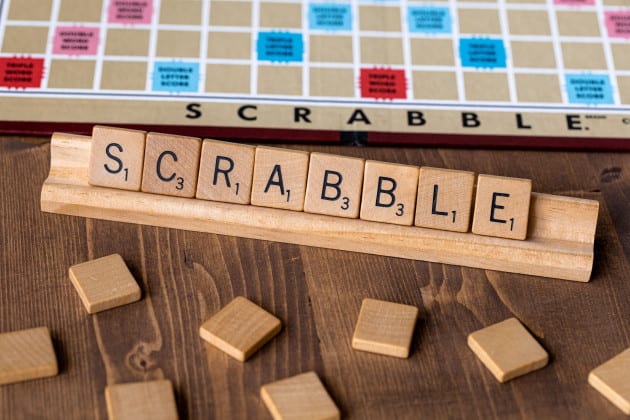
In this article from 2021, a journalist tagged along to the UK national Scrabble championship to discover more about the intense world of competitive Scrabble.
(The Times, approx. 13 mins reading time)
“Over the two days there are 16 rounds, each with 39 games between the 78 competitors. There are two divisions and the logic behind who plays whom within those two divisions is surprisingly complicated. The important thing is that gradually the highest-performing players should play the other highest-performing players. In this sense it is more like a league than a knockout, but it can still be decided in the very last game. This year, in fact, it is.”



have your say