Sign in. It’s quick, free and it’s up to you.
An account is an optional way to support the work we do. Find out more.
Sign in. It’s quick, free and it’s up to you.
An account is an optional way to support the work we do. Find out more.
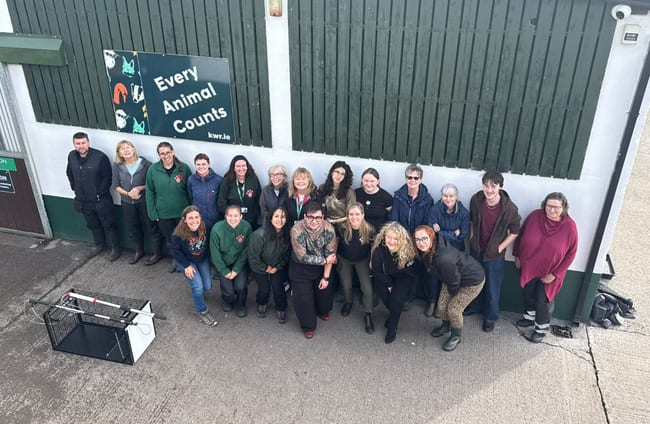
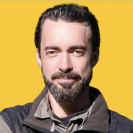
I’VE SPENT THE last few years meeting people quietly doing brilliant things for Irish biodiversity, but few of them take as hands-on an approach to saving nature as Pearse Stokes.
Pearse is rescue coordinator with Kildare Wildlife Rescue (KWR), where he trains Wildlife First Responders and takes on the rescues that are too high, too fast, too wet or too awkward for anyone else.
He has been rescuing wildlife for over a decade, was one of KWR’s founders, and once worked as an anti-poaching ranger in South Africa. Recently he won the Science Communication & Public Engagement category at the Working with Nature Awards at Powerscourt Estate, for his social media videos that show how rescues are done safely and what wildlife faces every day.
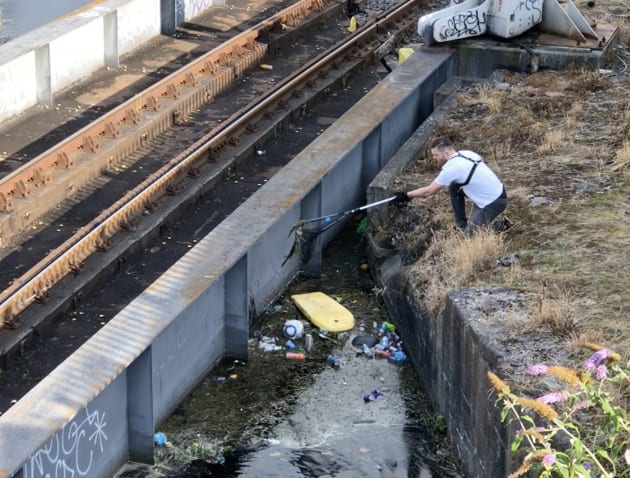 Pearse rescuing a duckling in Dublin City Centre. Pearse Stokes
KWR deserves a story of its own, and I’ll be writing it separately soon. There are many amazing people running the organisation fuelled by pure passion for Irish animals. Pearse is just one of those individuals. And he has quite a story: how he ended up on a roof with a yellow umbrella, what the work is really like, and what he wants every one of us to know.
Most people I interview on this subject are like me: grew up with a love for nature, watching nature documentaries and searching for bugs in the garden. This was the first time that the person I was talking to wasn’t nature obsessed from the start.
Pearse didn’t grow up wanting to save wildlife. He came to it, by his own telling, from martial arts and combat sports, and what he calls a very adversarial view of the world. Then, roughly 15 years ago, he spotted a request on social media about a fox in south Dublin that needed help.
He saw a chance to impress a girl. “Do you want to go on a date?” he asked her. “We can go rescue a fox.” This is how he discovered catching a fox is far from straightforward.
After some advice from a man in Kildare and an hours-long, patient stint coaxing the fox into a carrier borrowed from a local dog walker, they drove it down that evening. The man in Kildare was Dan Donoher, now KWR’s manager, and Pearse remembers how calmly and easily he handled the animal. He remembers thinking “I’m a fighter, but this guy is genuinely tough!”
A week or two later, Dan rang about a herring gull chick that had fallen into a back garden near Croke Park. Dan had said that unless Pearse could get the gull back in the nest, he’d have to drive it all the way to Kildare. Determined, Pearse put the chick in a shoebox, the shoebox in a backpack, grabbed a yellow umbrella to ward off swooping parents, and climbed a wall, a ladder and three roofs, gripping the tiles with his fingernails.
Below him, the neighbours gathered to watch “this lunatic with the umbrella”. While he got the chick back in the nest, the parents and what he calls the aunties and uncle gulls circled in protest. He had never given a gull a second thought.
They’re now some of his favourite animals.
But it was what he felt holding that tiny chick that stuck. “Our world is so hostile to it,” he told me, and when you’re the only person who can help, “you start to realise that there is very, very little help out there for wildlife, and that seemed like a great injustice to me.”
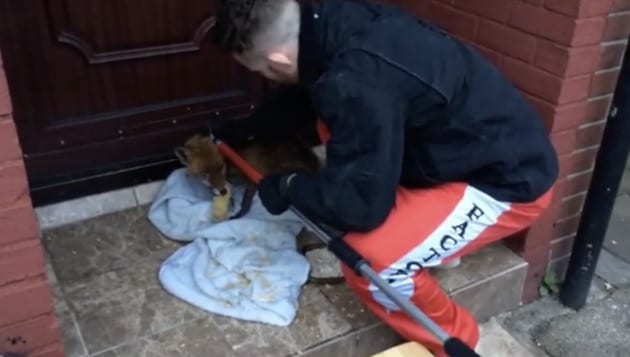 Pearse catches a fox in need of help in Dublin 8. Pearse Stokes
Back then, wildlife rescue in Ireland was a patchwork of people doing what they could in back gardens, and Pearse says someone always knew of a woman at the end of the road who looked after wildlife. He set up a WhatsApp group of volunteers called Fox Force Five. They were overwhelmed almost immediately. “This needs to be Fox Force 50,” he remembers thinking, “and then it needs to be Fox Force 500.”
A case only reaches Pearse if something about it is technical: the animal is hard to reach, too mobile, up high or in a river, or a crime is involved. The helpdesk sends him a video and a map pin, and he studies the overhead view before he leaves. On the drive he rings the person who found the animal.
Will they still be there when he arrives? Are there kids or pets they can keep inside?
“As soon as I take on a case, I consider that animal essentially to be in my care,” he says.
“I’ve made enough mistakes to know; failure is not an option or me”. On arrival, he does a quick size-up of hazards and anything he can use, like a shed to herd an animal into, or a wheelie bin to block an escape route.
“When I post a video of a rescue and if it looks easy, it’s because I’ve eliminated the 1,000 ways it could go wrong, and I did it the one way it would go right.”
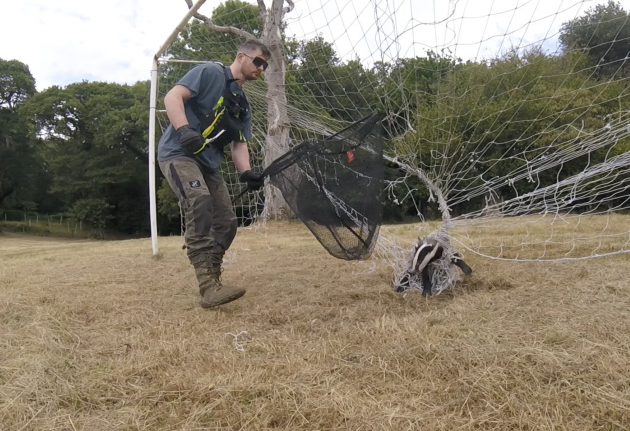 This time, rescuing a badger from a football net. Pearse Stokes
The circumstances are rarely kind. There are rooftops and rivers, coastlines littered with fishing tackle, and birds tangled in anti-bird netting, razor wire and barbed wire. Others are wedged in gaps too narrow to take flight from. Confined spaces are Pearse’s weak spot. He once couldn’t fit his hands behind a stove to reach a trapped jackdaw, and a colleague with daintier hands made light work of it.
Then there are road incidents. At this time of year, rush hour and dusk overlap, and foxes, badgers and swans pay the price. Swans crash-land on wet roads that they mistake for canals. Hedgehogs fall down drains, and a hedgehog you can catch in daylight is likely to be in trouble.
The lesson he is keenest to pass on is this: any animal found entangled should come into care, however good it looks. Last year Pearse freed a fox from an electric fence, and the next day it looked ready to go home. A few days later, the skin on its legs began to rot away from compression injuries, and it needed weeks more treatment. “The injuries sometimes take a while to be seen.”
After years of this, some animals still stop him in his tracks. Gannets, he says, are “phenomenal looking alien species”. The first razorbill he caught, at night on a beach, turned out not to be the guillemot he assumed when it started barking at him. The greater black-backed gull is one of his favourite birds in Ireland. He has caught peregrine falcons and buzzards that were grounded but could still fly, yet the tiny, beautiful yellowhammer is the one that sticks with him, because small garden birds are fiendishly hard to catch.
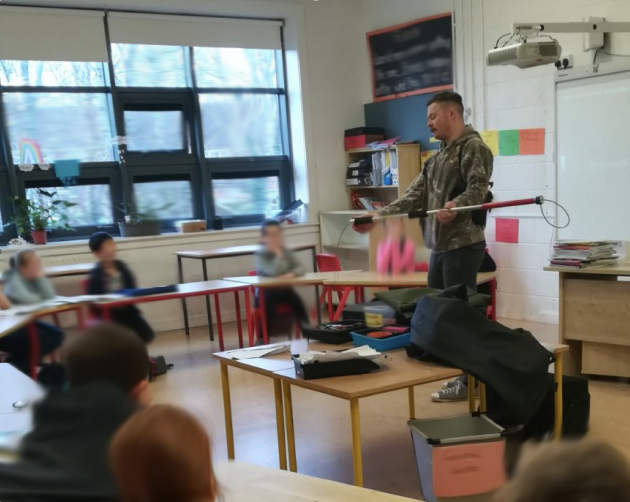 Pearse in a primary school teaching kids about wildlife and rescues. Pearse Stokes
The odd ones turn up too. Escaped exotics, a meerkat among them, have come through KWR’s doors over the years. But the charity is only licensed to rehabilitate native, protected Irish species, so the exotics aren’t something it can take in.
One rescue he’s especially proud of happened at a Dublin maternity hospital. A fox with a limp had been spotted, and Pearse and team arrived to scope out where to set a trap. Then the fox simply walked past him. He had no net, no carrier, only gloves. He chased it, lost sight of it, worked out where it would choose to go next, tracked it around the back storage area, crept up behind it and wrangled it back to the carrier. The hospital’s security team gave him CCTV footage after his own camera died. Then he carried the fox, fighting him all the way, back to the carrier.
Pearse says he has become less emotional about rescues over the years, and more driven by duty. “There’s been an injustice done to that animal, and I am lucky. I have the privilege and therefore the responsibility to be able to do something about that.” That’s why he’ll get out of bed at midnight for a call.
It has also taught him to see species differently. People are always shocked, he says, when he tells them there have never been fewer gulls than there are now. They’re supposed to be on the cliffs and out at sea, but there are no fish in the sea. When he explains that, he watches people’s hearts change. The gull in the city isn’t a pest. It is “a refugee that’s coming to the city to just try and survive.”
Animal rescue is a huge part of his life, but Pearse does it all this alongside a full-time job. Giving 200% of your time to rescue, he warns, means you’ll “burn out very quickly”, and most people who try to do.
What keeps him going is the company. He talks about volunteers who care deeply for zero reward, who dust themselves off after an animal doesn’t make it, knowing it will break their hearts again, and do it all over again. “We are an ecosystem of help,” he says, and he believes the duty to fix this should feel less like crushing responsibility and more like a joyous opportunity.
The UK has around 100 rescue organisations; we have one.
Pearse’s honest answer is that Ireland has a long way to go. “We’re 30 years behind the UK,” he says. Britain has around 100 rescue organisations the size of KWR or bigger. Ireland has one. A few others are coming up, such as Wildlife Rescue Cork, and individuals like Susan Kerwin of Bat Rehabilitation Ireland in Limerick and Bev Truss of The Hogsprickle in Clare do phenomenal work. But, he says, “we need one in every county in Ireland.” He thinks Irish law is actually better than the UK’s, and that KWR can be the blueprint, mentoring new centres as they grow.
The need is plain to see. KWR is four years old, and each year they’ve seen about a 40% increase in the cases they are contacted about. 12,000 last year and already 20,000 so far this year. Of those, not all will require a response (just advice, for example). Wildlife rehabilitation is difficult, of the animals that do come into care, the best standard for animals to recover and be returned to the wild is about 40%. KWR exceeds that figure, and they are proud of that.
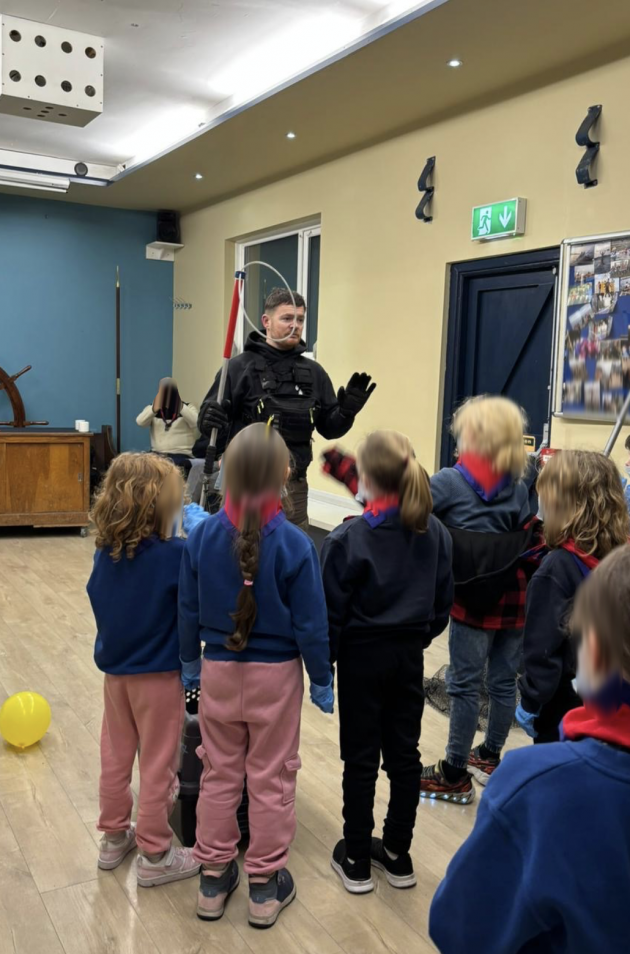 Teaching the young Scouts (Beavers) all about wildlife. Pearse Stokes
He’s heard the counter-argument. Conservationists will sometimes claim that Wildlife Rehabilitation is pointless – too small scale. Pearse’s reply is twofold. A single rescue story, such as a child releasing a pigeon, wins hearts in a way big infrastructure projects can’t. And KWR alone deals with some 9,000 animals a year, from one centre, in a country that needs many more.
He sees rescue as the sharp point at the top of a pyramid whose foundation is rewilding and other restoration work. Ireland can’t simply ban a pesticide and lean on national parks to bring species back, as the US did with the bald eagle, because our biodiversity is in such dire straits. When an animal that is given a second chance, Pearse points out that “Every day they are alive they are fighting the biodiversity crisis for us”.
He points out that many Irish species are more endangered than white rhinos in South Africa, which he has also worked to protect. He hopes that in 25 years we won’t need to rescue animals at all because the countryside will be abundant enough. I certainly share that hope.
As Pearse puts it, “you’ll never be left wondering if an animal needs help or not” once you’ve sent that video.
Pearse was surprised to be nominated for his award, and says he doesn’t see himself as a science communicator. He makes his rescue videos to win support for KWR, and he says the engagement has been real: people comment, and many have started supporting the charity through Patreon.
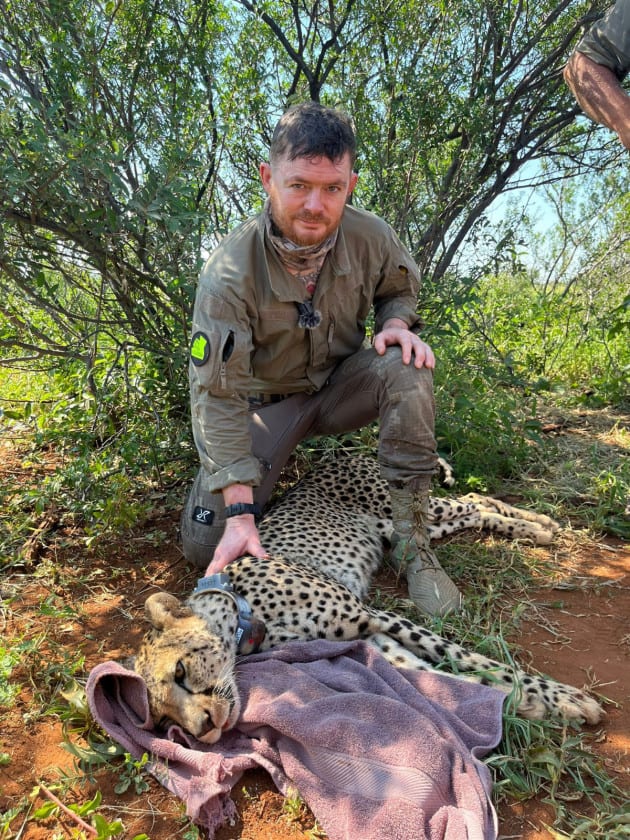 Pearse with a cheetah. Pearse Stokes
The judges, I’d say, saw what I see. His videos show people a side of nature they’d never otherwise know exists, and teach them how to act when they find an animal in trouble.
His asks of the rest of us are simple. First, take a video if you find wildlife in trouble. Second, find your role in this. “I would just implore people to volunteer with their local beach clean up, their local rewilding project, their local rescue centre,” he says, “anything at all to find their role in the ecosystem of help.” Like myself he believes the antidote to the endless worry about our environment is a community of like-minded people working to fix things.
KWR is always looking for volunteers (volunteer@kwr.ie), and you can support its work through donations, its Patreon or its wish list of supplies. It also runs wildlife first response training for the public over the winter. Pearse wants to thank the unsung volunteers behind the scenes who keep the whole machine running, and who rarely want to be in front of a camera.
For more, visit kwr.ie or follow Pearse on Instagram @Pearse_Stokes. You can follow Jack Morley’s Irish nature journey on his Instagram @the_rewildlife or on YouTube @TheRewildlife.


have your say